Jarvis Lock & Key SpecialistsBulletin 1 of 3Haldimand County, Ontario
Deadbolt Installation: inside the visit
If your door already has a knob or lever bore and nothing above it, adding a deadbolt is a boring job in the literal sense.
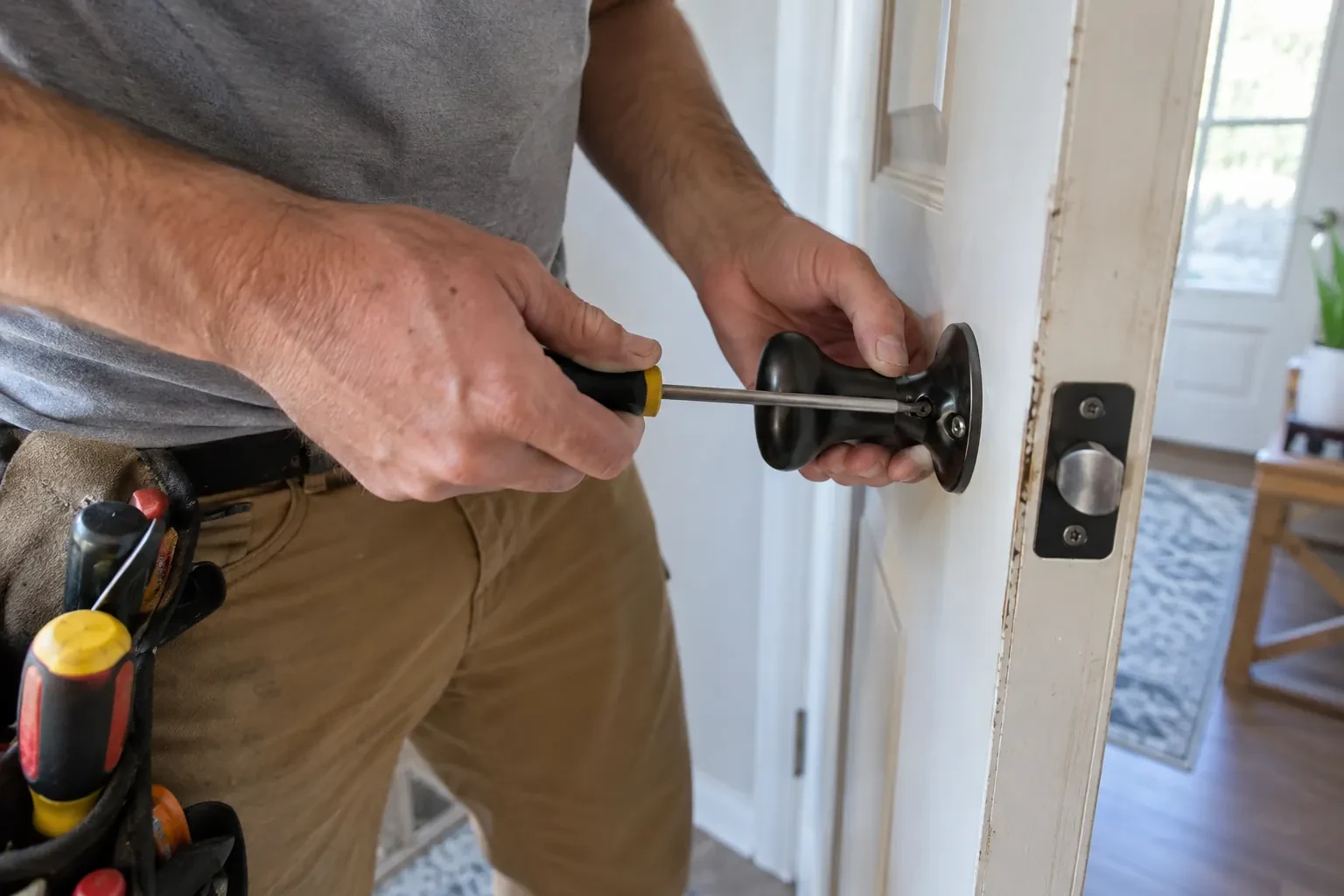
If your door already has a knob or lever bore and nothing above it, adding a deadbolt is a boring job in the literal sense. A jig clamps to the door at the right height, usually 140 to 150 mm above the knob centre, and guides a hole saw through the face and a smaller bit through the edge. The locksmith mortises the edge so the bolt faceplate sits flush, sets the bolt to the door's backset, then fits the cylinder outside and the thumb-turn inside. The frame is marked from the bolt itself, bored and chiselled for the strike, and the lock is tested open and closed.
How the door hangs and closes
Before a new bolt goes in, the door has to close properly on its own, so the locksmith swings it a few times and watches. A door that drops on tired hinges, binds against thick weatherstrip or has to be pulled to latch will put a new deadbolt out of line the moment the season changes. Hinge screws are tested for grip, the gap around the door is read for evenness, and the existing latch is checked against its strike. Small corrections here, such as a longer hinge screw into the framing or a trimmed weatherstrip, are made first so the deadbolt can be set to a door that sits square and stays there.
Swapping an old deadbolt in place
When an existing bolt is being replaced, the work starts by backing out the two inside screws and lifting off both housings, then removing the bolt from the edge. The bore and backset are measured against the new hardware, and any difference is dealt with before the new bolt goes in: a larger bore for a smart deadbolt, a different faceplate shape, or a spacer for a thinner door. The new bolt, cylinder and thumb-turn go on in the usual order. The old strike comes off too, the pocket is deepened if needed, and a reinforced strike with long screws replaces it, so the upgrade happens on both sides of the gap.
Ready for a smart lock later
Because the door was prepared to the standard bore and backset, it suits many future options, though the model chosen later still sets its own bore, backset and thickness requirements. Keypad and app-controlled deadbolts fit the same 54 mm cross bore and the same edge bore as the mechanical lock fitted today, so upgrading later means swapping the hardware, not cutting the door again. The backset and bore measurements are written on the packaging left with you. If you want to think about a keypad down the road, ask the locksmith which models suit the door thickness and whether a backup keyed cylinder is worth having for the one day the batteries are flat.