Sound familiar?Haldimand County
- The call
- Something went missing from the storeroom over a weekend, and when you ask who was in the building, the honest answer is anyone with a key. There is no list, no time stamp, no way to narrow it down.
Something went missing from the storeroom over a weekend, and when you ask who was in the building, the honest answer is anyone with a key. There is no list, no time stamp, no way to narrow it down.
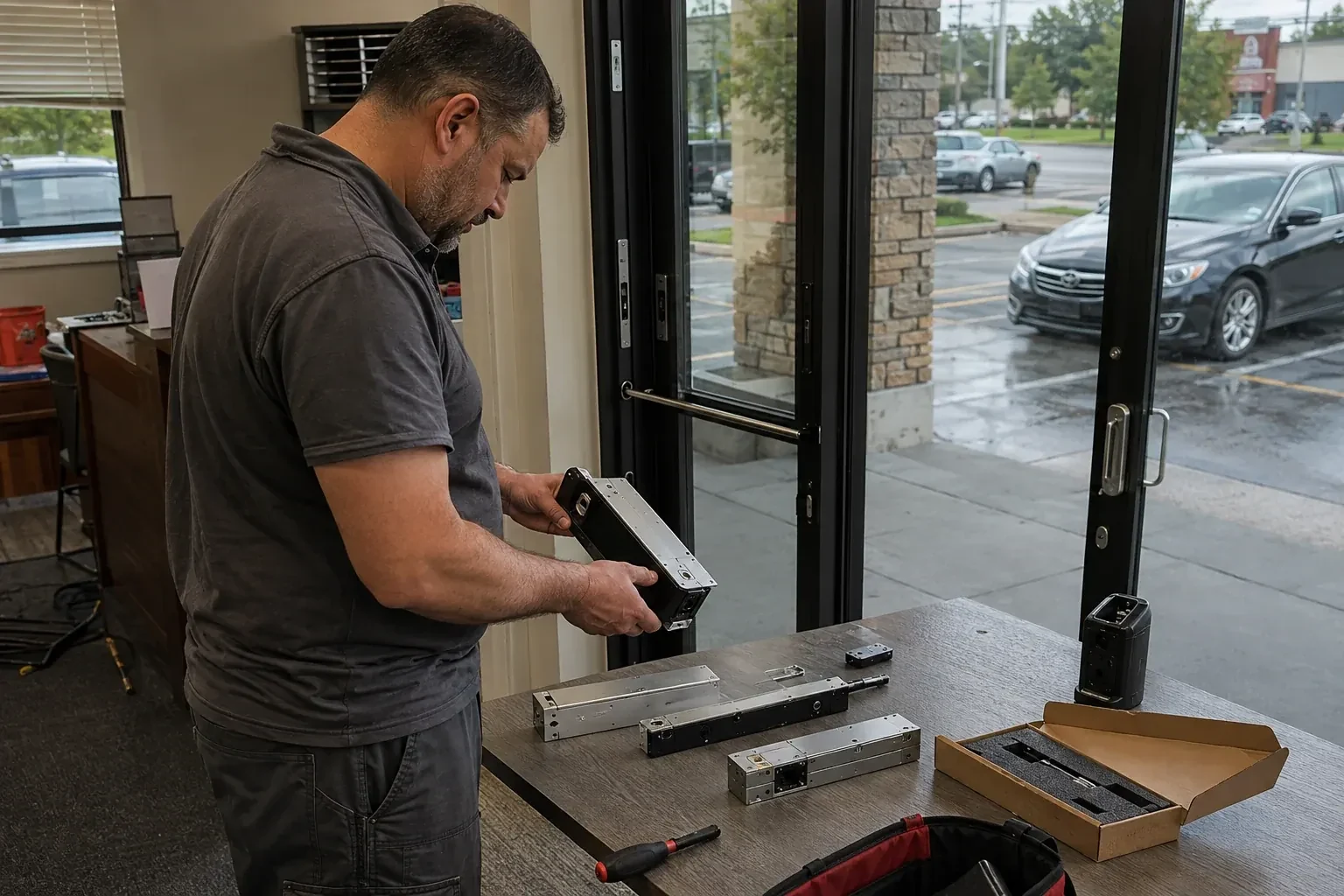
Locking hardware varies by opening: an electric strike, fitted into the existing frame, keeps the mechanical latch and releases it briefly for a valid credential; a magnetic lock clamps the door shut with an electromagnet and suits a frame or door that will not take a strike; and some openings use an electromechanical lock or a different controlled lockset entirely. Several of these can also be fitted with a mechanical override cylinder, so a lost signal, a dead battery, or a controller fault still leaves that particular door opening by key, though the option depends on the hardware chosen for it.
Sound familiar?Haldimand County
Access Control Installation · Haldimand County
Scene 1
A door that leads outside along a path people use to leave the building gets special attention, no matter what lock currently sits on it, so the survey flags every one of those openings early. On an exit door, a magnetic lock only gets considered alongside a request-to-exit device and a tie-in to the fire alarm system, while an electric strike paired with a standard latch usually needs no extra hardware to let people out. Sorting exit doors from interior doors before any hardware is ordered keeps a smooth, one-motion exit part of the plan from day one rather than a fix added afterward.
Scene 2
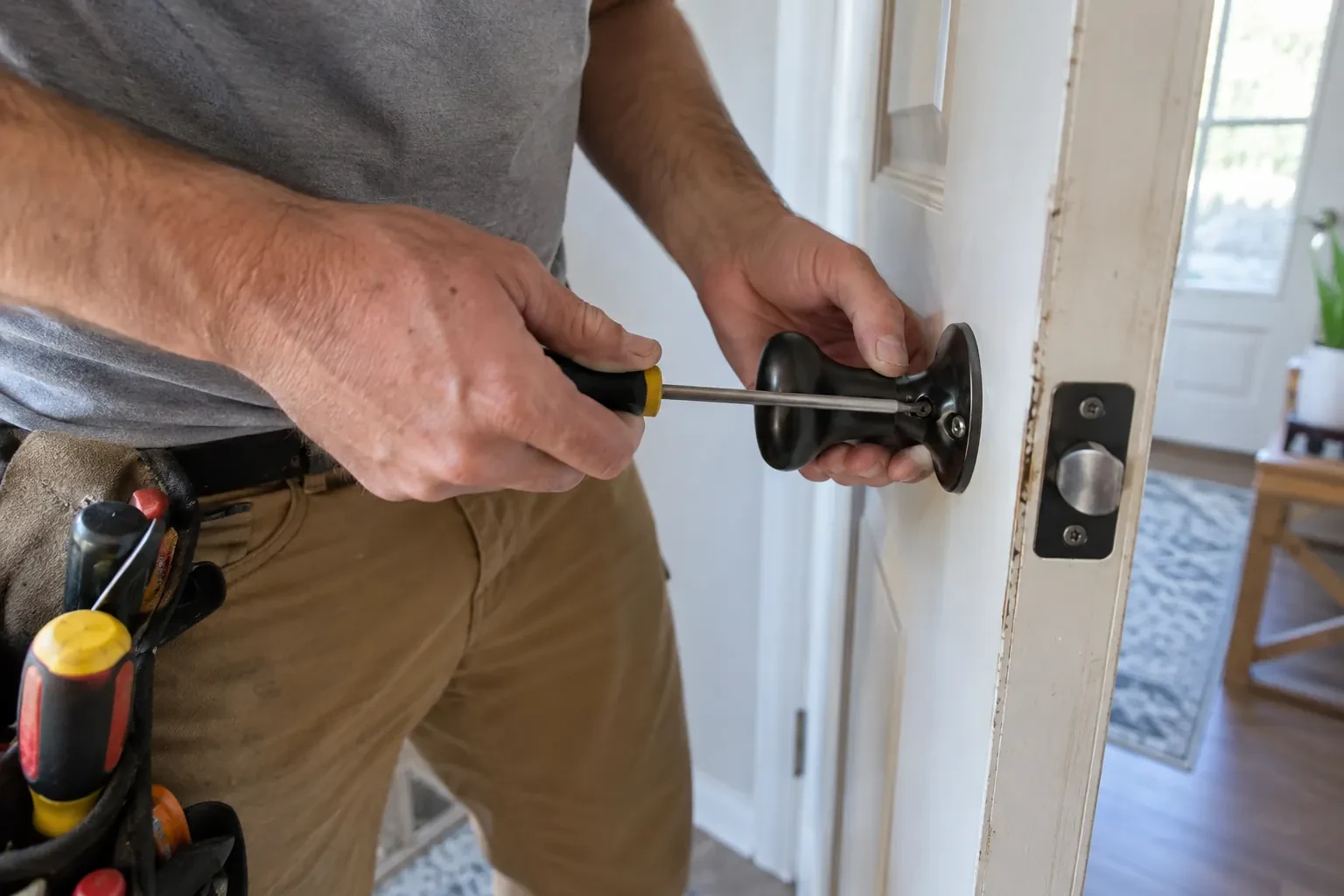
Where the selected hardware supports one, the locksmith fits a conventional cylinder alongside the electronic reader, cut to work with the rest of the building's keys rather than sitting apart as an odd one out; some access-controlled hardware is built without a key cylinder at all. On a door getting the override, the locksmith confirms it operates the latch or bolt cleanly with the electronic hardware in place, and notes who on staff will hold that key. On that door, a dead battery, a controller fault, or a power outage becomes an inconvenience rather than a locked business, since it still opens the ordinary way while the issue is sorted out.
Scene 3
A controlled door depends on power reaching the controller, the lock, and the reader, so battery backup is worth specifying and sizing for that opening rather than assumed to come standard, so a short outage does not leave anyone locked out or, on a fire-alarm-tied opening, locked in. That backup, where fitted, is worth checking periodically, along with the request-to-exit device on any magnetic lock, since both need attention between visits; a fail-secure lock can stay locked from the secure side once power is gone even where people can still leave freely. A short test, a few times a year, catches a fading battery early.
What shapes the quoteJarvis Lock & Key Specialists
FeesSame any hour
An electric strike fits into the existing door frame and works with the door's own latch or bolt, releasing it briefly for a valid credential while otherwise behaving like an ordinary strike plate. A magnetic lock instead clamps the door shut with an electromagnet mounted at the head of the frame, and it is always installed with a request-to-exit device so someone leaving is never held up looking for a way out.
In most cases, yes. An access control installation can be planned to share information with an existing alarm panel, so an arm-or-disarm event lines up with whoever unlocked the door, and with a camera system, so a recorded clip can be matched to a specific credential rather than only a timestamp. The exact integration depends on what the existing alarm and camera equipment support.
A keypad code needs no card to lose, but a code shared among several people is effectively no longer individual, and a forgotten code left active is a common weak point. A card or fob tied to one named person avoids that particular issue, since it is switched off individually rather than reset for everyone at once. Many businesses use a code for general areas and a card wherever entry needs to be traceable to one person.
Haldimand-NorfolkOntario
Access Control Installation · Hagersville, Jarvis, Nanticoke, Featherstone, Fisherville, Selkirk, White Oaks Village, Woodlawn Park
Every square is one home in a hundred.
On-site assessment
Something went missing from the storeroom over a weekend, and when you ask who was in the building, the honest answer is anyone with a key.
(365) 651-9607, open 24/7.
On-site assessment preferred · (365) 651-9607, open 24/7