Sound familiar?Featherstone
- The call
- After a wet summer the entry door sits lower in its frame. The lock works perfectly when the door is open, but with it shut you have to lift the handle and shoulder the door to get the deadbolt to throw.
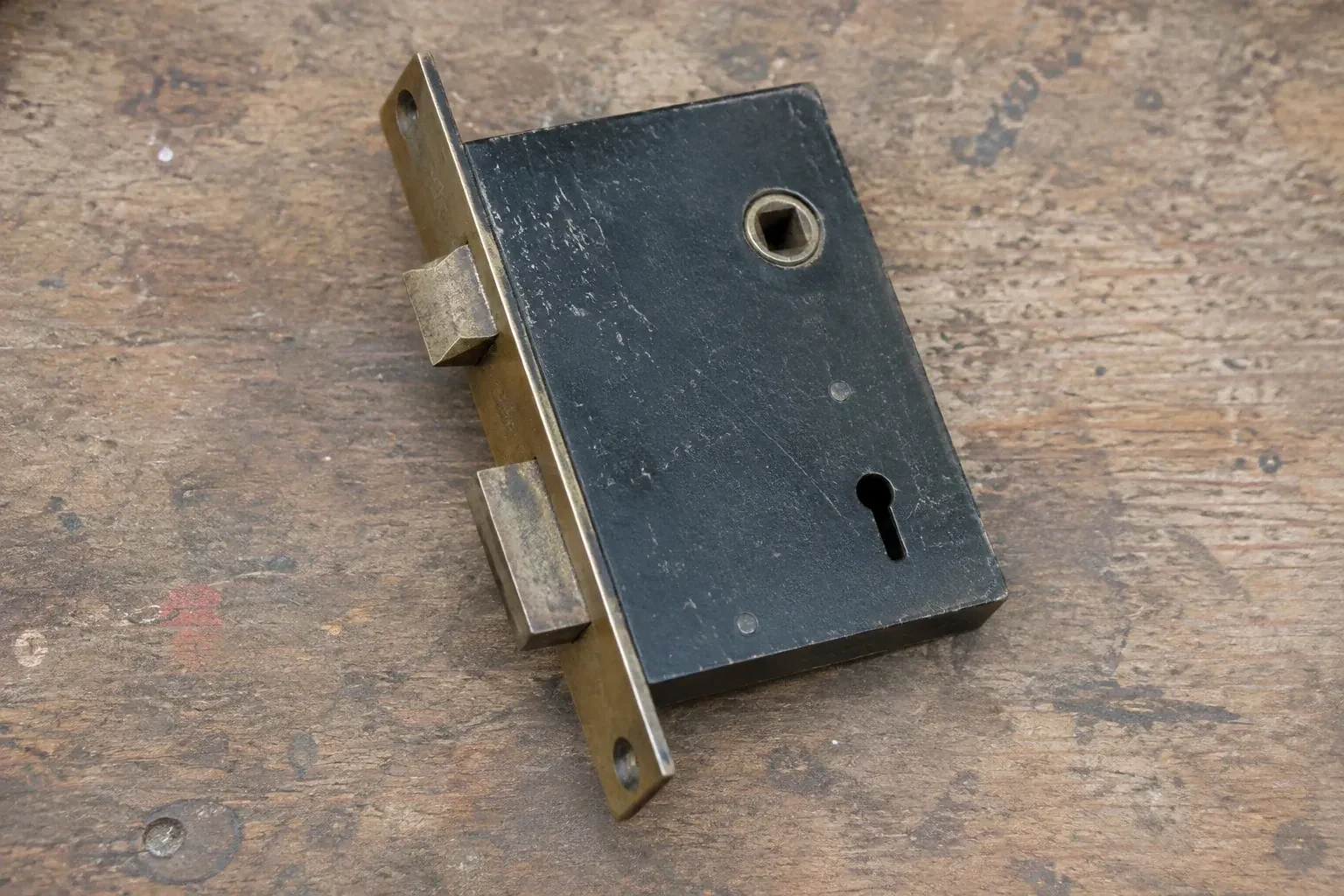
The old skeleton key still fits the keyhole, but it now needs a jiggle, a lean on the door and a little luck before the bolt moves. Last week it took three tries.
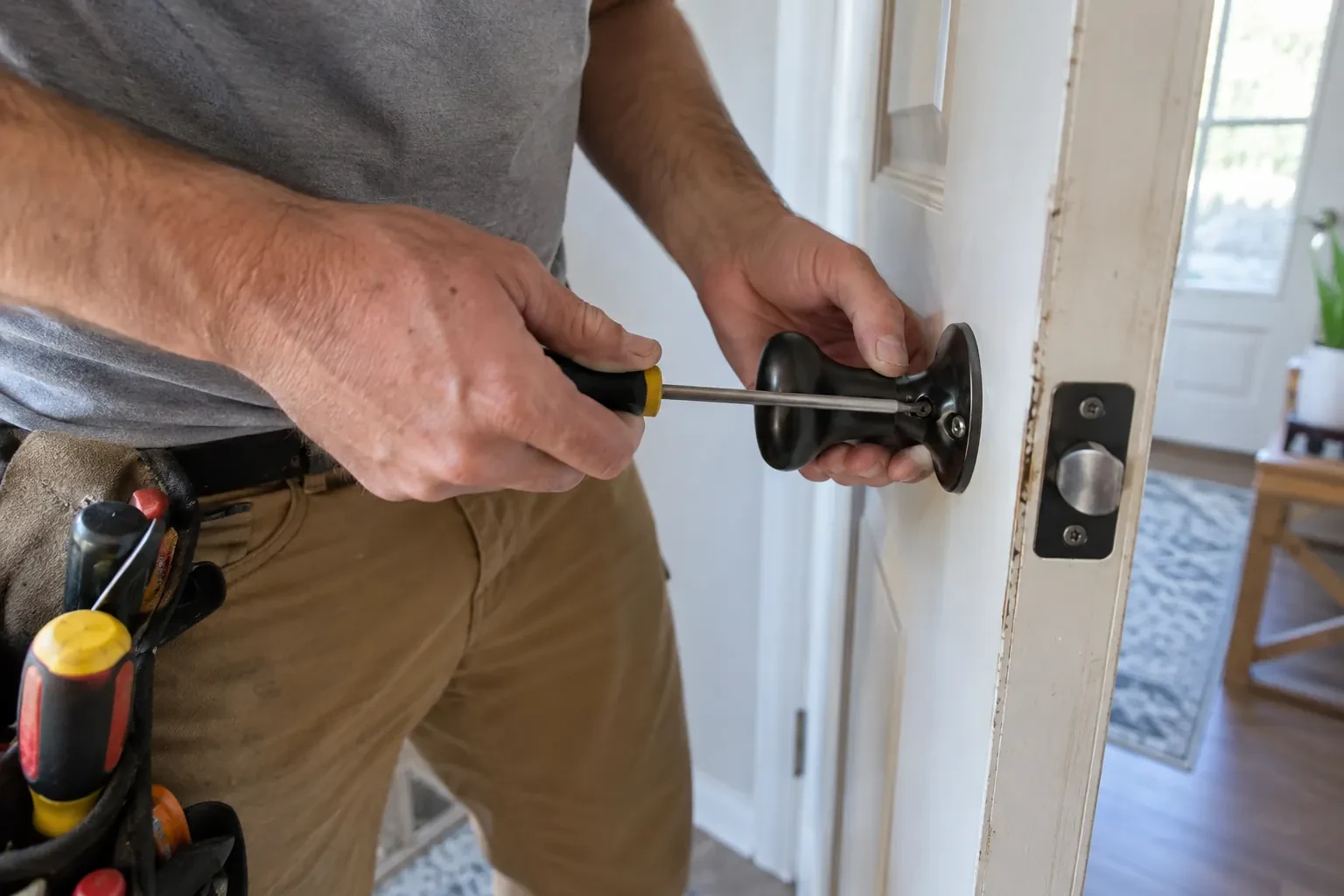
The trim on the door face is the other half of the lock. The knobs ride on a square spindle that passes through the hub of the case, held by small set screws, and the escutcheons cover the spindle and keyholes. Slack in a knob, a knob that pulls off in your hand, or a thumb-turn that spins without moving the bolt usually traces to a worn spindle, a stripped set screw or a hub whose square has rounded. The service replaces spindle and screws, matches a hub or lever from stock or makes one, and fits everything so there is no free play before the latch starts to move.
Sound familiar?Featherstone
Vintage Mortise Lock Service · Featherstone
Scene 1
The first check has nothing to do with the lock. The locksmith confirms that the person asking for the work owns the home or lawfully lives in it, since a serviced lock and a freshly cut key are, in the end, a way into someone's house. Photo identification and something tying you to the address usually settles it in a moment. On a rental, the landlord and the tenant are expected to agree on lock changes and share keys, so the locksmith asks who should hold the new bit keys or cylinder keys and notes it. This small formality protects the household as much as anyone, and it is done before a screwdriver comes out.
Scene 2
Before the case goes back, the pocket and screw holes get whatever attention the check turned up. Stripped holes are drilled out, plugged with glued hardwood dowel and re-drilled so the faceplate screws bite. A pocket that has loosened is packed with a thin hardwood shim glued to one wall so the case sits tight. A split at the edge is glued and clamped. None of this changes the door's appearance; it simply gives the rebuilt lock something solid to sit in, which matters because a case that shifts in its pocket will bind the spindle and undo the bench work in a few months.
Scene 3
You are handed keys made to the restored lock, counted into your hand, and each one is tried in the door before the locksmith drives away. For a bit-key lock that means keys filed to your case; copying one needs the right blanks and equipment, which most hardware counters do not stock, so the locksmith keeps the record needed to make more. For a cylinder lock it means keys cut to the new combination, with any old keys now useless. Keep one spare somewhere other than the door, ideally with a neighbour or in a lockbox, and treat bit keys gently: they bend in a pocket and a bent key is how most of these locks become stiff again.
What shapes the quoteJarvis Lock & Key Specialists
FeesSame any hour
Springs, first and foremost: the latch spring, the hub spring that returns the knob, and the small springs on the deadbolt levers. After that, the spindle and knob set screws, a hub whose square has worn round, a worn deadbolt lever or follower, and on later locks the cylinder set screw or the cylinder itself. Bolts, cases and trim are almost always kept, cleaned and refitted rather than replaced.
Yes. A bit key is cut to the lock rather than copied from another key: the locksmith chooses a blank of the right size and files the bit until it clears the wards and lifts the levers inside your case, testing as they go. A pin-tumbler cylinder on a later lock is decoded or rekeyed and keys cut to it. Bring any loose keys that came with the house, since one may be close enough to serve as a starting pattern.
Rarely, and it is not the better route. Almost everything that fails is inside the case, and the case only opens once it is out of the pocket, which takes a few minutes and leaves no mark. Working through the keyhole with an unapproved or over-applied spray tends to wash out what little lubricant should stay and gums the levers later. Removing the case, cleaning it properly and refitting it is the repair that lasts.
Haldimand-NorfolkOntario
Vintage Mortise Lock Service · Haldimand County, Hagersville, Jarvis, Nanticoke, Fisherville, Selkirk, White Oaks Village, Woodlawn Park
Every square is one home in a hundred.
On-site assessment
The old skeleton key still fits the keyhole, but it now needs a jiggle, a lean on the door and a little luck before the bolt moves.
(365) 651-9607, open 24/7.
On-site assessment preferred · (365) 651-9607, open 24/7