Sound familiar?Selkirk
- The call
- The fire inspector's note is blunt: the banquet hall's second exit still turns on a deadbolt, and the crowd it is rated to hold needs a door that opens under one motion, no key involved.
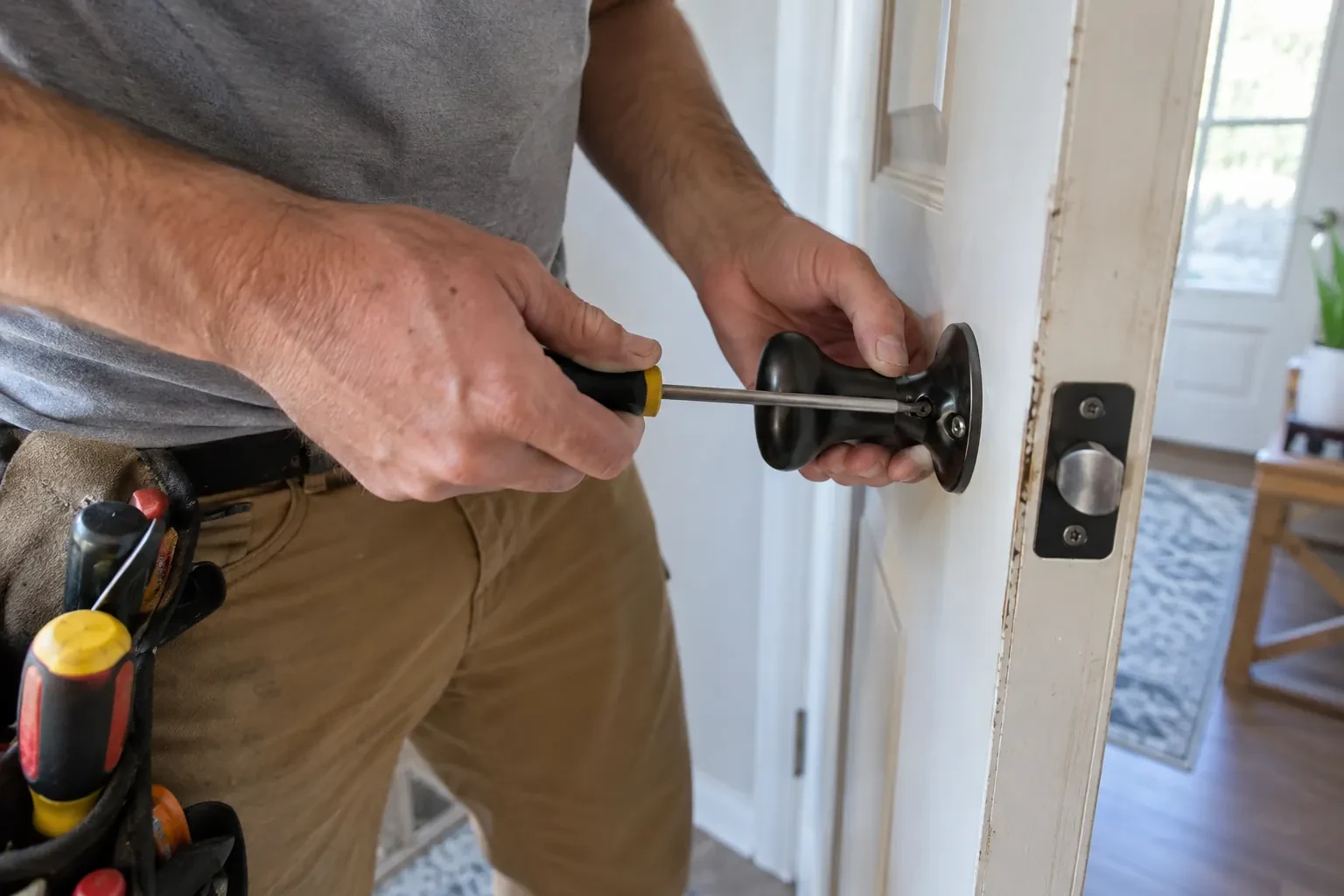
Someone at the front counter always has to unlock the side door by hand before the lunch rush, because the round doorknob out there was never meant to be an exit for a room this size.
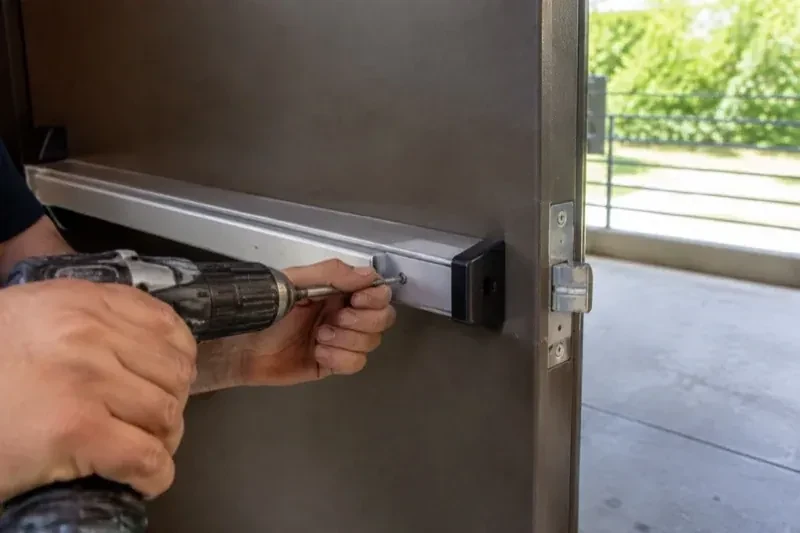
A tenant fit-out is a common point to bring exit hardware into a space for the first time. As walls move and a room's intended use becomes clear, the doors serving it get measured against that use: occupancy, fire rating, width and whether the space now qualifies as an assembly occupancy. Specifying and fitting the hardware alongside the rest of the fit-out, rather than after an inspector flags it, keeps the schedule intact and gives the space a documented exit from the day it opens.
Sound familiar?Selkirk
Panic & Exit Hardware · Selkirk
Scene 1
When a card reader, keypad or intercom is part of the plan, the assessment includes a conversation about the exit side of the same door: does the reader need a request-to-exit signal so the panel knows someone left rather than forced the door, and does the door need electric latch retraction so it can be released remotely without ever compromising the crossbar's push-to-exit function. These questions are answered before the device is ordered, because retrofitting an electrified function onto hardware chosen without it in mind rarely goes cleanly.
Scene 2
Any signage the opening needs, such as a label identifying the door as an exit or noting an alarm, is fitted alongside the hardware rather than left for later. Where the device carries a dogging function on a standard opening, the key or keyed cylinder for it is handed to whoever the building's management names as responsible, along with an explanation of when dogging is appropriate; on any door that sits in a fire separation, mechanical dogging is left off the device entirely and is never installed as a management choice.
Scene 3
If the space changes use again, adds seating, or the occupant load creeps upward with a future renovation, the hardware fitted now is already suited to a use that requires it, rather than something that will need revisiting the moment the room grows busier. Keeping a note of the occupant load the current hardware was specified for means a future change can be checked against that number before it becomes an inspector's finding rather than a planned upgrade.
What shapes the quoteJarvis Lock & Key Specialists
FeesSame any hour
Fire door assemblies, including their exit hardware, are inspected and tested on a set schedule, and it is practical to check any exit device on the same rhythm even where the door is not fire-rated. A brief check for a stiff crossbar, a latch that no longer seats fully, or a strike that has drifted is enough to catch most wear before it becomes a callout.
Yes, and it is common. A building rarely has only one exit affected by an occupant-load or fire-rating question; stairway doors, assembly-room exits and any doors altered together during a renovation are usually assessed and fitted in the same visit, with one written record covering every device installed across the building.
It comes down to occupancy and occupant load rather than preference. Rooms used for assembly, such as banquet halls, places of worship or gyms, and doors serving a stairway in a busier building, are where this hardware becomes the standard choice instead of a keyed lock on the exit side. A fire inspector or building official is the practical way to confirm whether a specific room has crossed that line.
Haldimand-NorfolkOntario
Panic & Exit Hardware · Haldimand County, Hagersville, Jarvis, Nanticoke, Featherstone, Fisherville, White Oaks Village, Woodlawn Park
Every square is one home in a hundred.
On-site assessment
Someone at the front counter always has to unlock the side door by hand before the lunch rush, because the round doorknob out there was never meant to be an exit for a room this size.
(365) 651-9607, open 24/7.
On-site assessment preferred · (365) 651-9607, open 24/7